

President Trump started the war in the Middle East promising to crush Iran. A few months later, he is negotiating a deal that leaves almost all pillars of Iranian power standing. Indeed, from "unconditional surrender" to concessions on missiles and uranium enrichment, Donald Trump appears to be abandoning one by one the core goals and the "red lines" he had set himself. At the same time, revelations about secret documents and backstage commitments between Washington and Tehran intensify questions about what the agreement really includes and who ultimately gave up more at the negotiating table… a question that may never be revealed.
No… problem
When the war with Iran began on February 28, President Donald Trump proclaimed that the American military would "destroy their missiles and completely level their missile industry." "It will disappear completely, once again," Trump said in a recorded message. In the days that followed, his administration presented the elimination of the Iranian missile program as one of the most important goals of the war, citing the threat it posed to American bases and US allies in the region.
However, now that Trump has reached a preliminary agreement with Iran, his stance is completely different. Speaking at a press conference on Wednesday at the end of the G7 summit in France, he hinted that it is perfectly legitimate for Iran to maintain some missiles. "They have to have some, because others have them," Trump said. He even added that "missiles are not the problem," as "they don't blow up the planet." Later he returned to the subject, saying: "Proportionally, I consider this acceptable."
Impressive retreat
This is a stunning reversal of position on one of the most important stated goals of the war. And it was not the only one. In his apparent attempt to reach a deal and disengage from the war, Trump has limited, sidelined, or abandoned almost all of his key goals. Trump's goals have been historically shifting. His administration often cited four main goals, but these changed depending on who was speaking and when. Often, he did not appear to possess a steady strategic compass for what exactly he was trying to achieve. Below are some of the most important goals he had set and their current status, based on his recent statements and the 14-point Memorandum of Understanding (MOU) with Iran, which includes significantly more concessions to Tehran than to Washington.
1. Elimination of the missile program
As Trump said on February 28, "we will destroy their missiles and level their missile industry. It will disappear completely." By the end of March, the goal had been narrowed to "drastically reducing" Iran's missile program. Today, the MOU contains no mention of missiles, as Iran had made this issue a non-negotiable "red line." Furthermore, Trump stated last Wednesday that Iran could keep a number of missiles.
2. "Unconditional surrender"
The American president had argued on March 6 that "there will be no deal with Iran except UNCONDITIONAL SURRENDER!". A little later, Trump appeared to abandon this goal, pursuing negotiations instead. There is now an initial agreement that includes extensive concessions to Iran, and many—even from the conservative camp—argue that this is more of an American surrender than an Iranian one.
3. Regime change
On February 28, Trump had stated: "When we finish, take your government into your own hands." "It will be yours." "This is the moment for action. Do not let it pass." This goal was quickly abandoned when it became clear that the Iranian people were not responding to Trump's promptings. The president has argued at times that the killing of Iranian leaders constitutes a form of regime change, yet the new supreme leader is the son of the previous one. On Wednesday, he stated: "I didn't do this for regime change."
4. Iran must never acquire a nuclear weapon
Trump's goal, as he himself had said on February 28, was to ensure that "Iran will not acquire a nuclear weapon. It is a very simple message: it will never acquire a nuclear weapon." Today, the matter remains open. The MOU states that Iran "reaffirms that it will not acquire or develop nuclear weapons." However, Tehran has always claimed that it does not seek to acquire them. At the same time, there are no clear indications of the terms that could permanently eliminate the risk.
5. Zero uranium enrichment
On April 8, Trump had said that "there will be no uranium enrichment," while on March 23, he had also stated that "we don't want enrichment." Today's situation is similar to the missile issue. Trump appears to have revised his position. He has stated that Iran could enrich uranium for peaceful purposes. "It's a little tough when other neighboring nations have it and you're not allowing them to have it for electricity production and similar purposes," he stated Wednesday. "We have to use a little common sense." Earlier, he told the New York Times that Iran could proceed with low-level enrichment, but "never for military use."
6. Seizure of Iran's highly enriched uranium
Regarding the seizure of Iran's highly enriched uranium, there is also a great deal of ambiguity. On March 23, Trump had said that "we also want the enriched uranium. We're going to go in there and take it ourselves." Today, the matter remains unclear. The MOU states that the two sides agreed to resolve the issue of enriched material stockpiles through a mutually agreed mechanism. However, the text suggests that the uranium will undergo "down blending" on-site under the supervision of the International Atomic Energy Agency, rather than being seized. On Wednesday, Trump stated that destroying these stockpiles is "much less important" than preventing Iran from acquiring a nuclear weapon. "It's much less important, because it's very hard to get to," he noted.
7. Destruction of the Iranian navy
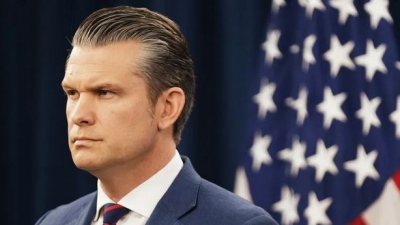
Many times, Trump and his ministers have claimed that the US has destroyed the entirety of Iran's navy. Characteristically, on March 2, Defense Secretary Pete Hegseth had said that "the mission of Operation Epic Fury is focused on destroying their navy and other security infrastructure." Today, the majority of the Iranian navy was destroyed in the first days of the war. However, Iran still possesses significant asymmetric capabilities to control the Strait of Hormuz through drones, mines, and small fast-attack craft.
8. Cessation of funding for organizations like Hezbollah and Hamas
All mention of Hezbollah and Hamas has also stopped. On March 2, Trump was saying that "we are also ensuring that the Iranian regime will not be able to continue to arm, fund, and direct terrorist armies outside its borders." Now, the US government has stopped referring to this issue for a long time, and the MOU includes no provision regarding Iran's support for Hezbollah, Hamas, or other armed groups. On the contrary, the agreement appears to favor Hezbollah, as it seeks to end the conflicts in Lebanon, where Israel is carrying out attacks against it. Trump stated Wednesday that in future negotiations, "we will also discuss the proxy terrorist organizations they possess." At the same time, the MOU immediately frees up Iranian oil exports, which the State Department has linked to the funding of these organizations.
9. Free and toll-free Strait of Hormuz
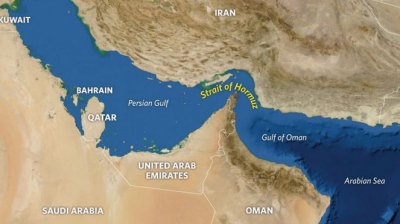
Among the biggest issues is navigation in the Strait of Hormuz. "We want them to be open. We want them to be free. We don't want tolls. It's an international sea lane," Trump had said on March 21, mentioning to the New York Times that it would be "permanently toll-free." The MOU states that Iran will use "best efforts" to ensure the safe passage of commercial ships free of charge for a period of just 60 days from the Persian Gulf to the Sea of Oman and vice versa. The mention of "only for 60 days" clearly falls short of the goal Trump had set. Meanwhile, Iran states it intends to impose transit fees. "Iran has sovereign rights in the Strait of Hormuz and naturally will charge for the services it provides," stated the Speaker of the Iranian Parliament and lead negotiator Mohammad Bagher Ghalibaf, according to Al Jazeera.
Behind the scenes
According to information reported by CNN, the US and Iran are working on secret proposals to implement the 14 points signed this week, including details regarding the future of Tehran's nuclear program, according to three American officials familiar with the negotiations, one regional official, and one former American official. Responding to a CNN question, Vice President JD Vance hinted that at least part of what government officials call "gentleman's agreements" with Iran, which go beyond the Memorandum of Understanding (MOU), has been recorded in writing.
They are not final
However, sources emphasized that these agreements are far from being considered final. Iran has not signed any additional document, as it did with the Memorandum of Understanding, which raises questions about whether the American administration is overestimating the commitments it has extracted from Tehran and underscores how fragile the effort for a final deal remains. "Some of these have been recorded in writing, but whether they are written or oral, that is exactly why we structured the agreement this way. We don't trust words, we trust actions and behavior. We will reward actions and not words, whether they are written on paper or not," stated Vance.
No delay
According to one source familiar with the briefings that Trump administration officials gave to top members of Congress, American negotiators chose to make the signed MOU public without waiting for the approval of Iran's top leadership on the more detailed proposals for implementing the 14 points. The American side did not want to delay the next phase of negotiations, as additional time would be required for the official approval of these secret proposals from Tehran, as CNN reports. Thus, it decided to proceed with releasing only the MOU and to work out the remaining details in subsequent talks.
Secret... documents
Although Trump administration officials assured lawmakers that they are unaware of any "side deals" related to the MOU, they admitted that there are documents that have not been made public. Among these, according to the same source, is an "Iranian government letter" inviting the head of the International Atomic Energy Agency (IAEA) to carry out inspections, begin the process of locating enriched material stockpiles, and allow the international agency to invite American nuclear experts to participate in the procedures. CNN requested comment from the Iranian delegation at the United Nations regarding the letter. The American network was unable to obtain many details about the content of the secret proposals. A regional official described their written parts as "working documents," which the two sides agreed to formalize at the next stage.
The 60-day period
Sources stated that they include more specific projections for how American negotiators wish for talks surrounding Iran's nuclear program to continue, as well as other issues. A 60-day period of technical negotiations was supposed to begin today, Friday, 6/19, in Switzerland, but the talks were postponed... without clear explanations from the American side. "There are discussions about the next steps, but there are no finalized agreements beyond the MOU, and the American negotiating team hopes to achieve additional agreements in the upcoming talks," White House spokeswoman Olivia Wales said in a statement to CNN.
Narrow room for maneuvering
The existence of these secret proposals highlights the extremely narrow room for maneuvering that American negotiators have to reach a deal that will allow both sides to appear as winners. At the same time, it underscores the possibility that there may never be an agreement that goes beyond the relatively vague terms of the MOU. Furthermore, this fact may give new arguments to critics of Donald Trump's strategy toward Iran, who argue that he is doing exactly what he accused then-President Barack Obama of doing in 2015, when he signed the original nuclear deal with Tehran, which Trump canceled in 2018. At that time, Republicans denounced the so-called "secret side deals." In fact, Congress had passed a law requiring any nuclear deal with Iran—including side deals or verbal commitments—to be submitted for approval.
Mutual understanding
The supplementary proposals also include a mutual understanding regarding the extent to which Iran will be allowed to continue uranium enrichment at any level, according to sources. This is one of the most controversial issues both in the initial negotiations and in the internal political debate surrounding the agreement. Trump administration officials argue that the MOU and the related "gentleman's agreements" are "performance-based," meaning they reward only positive behavior from Iran. Critics, on the other hand, argue that the agreement offers immediate benefits to Tehran through the lifting of sanctions, without binding mechanisms for its nuclear program or other American priorities.
The devil is in the details
The decision to keep the proposals secret is almost certainly aimed at avoiding political cost in both countries in order to move the process forward, notes arms control expert Jeffrey Lewis. As he explains, much of the technical information that such an agreement might contain had already been made public in the context of the nuclear deal that Barack Obama had concluded with Iran in 2015. "There is no national security reason to keep information secret that was public in the context of the JCPOA," said Lewis. "The devil is in the details, and someone doesn't want us to see one of those devils." A senior American official stated Wednesday that "the slogan we want to accompany this deal is: no side deals, full transparency."
No final nuclear deal
However, so far, Trump has not reached a final nuclear deal with Iran. The proposals—the so-called "gentleman's agreements"—remain unsigned, according to sources. Lewis recalled that in 2015, negotiators found "extremely ingenious technical solutions that allowed both sides to claim they won. It was impressive that common ground was found." Without public access to the parameters of the current negotiations, it remains unclear how Trump will be able to reach an agreement substantially different from the one Obama signed in 2015.
Maybe there will never be a final deal
It is also possible that the negotiations will never lead to a final agreement, much less within the 60-day deadline provided by the MOU. The basic function of the Memorandum might prove to be simply the cessation of hostilities with Iran and not the creation of conditions for a broader nuclear deal. Both sides have set such strict public "red lines" that any substantive compromise now appears either unachievable or politically too painful to be made public. As Lewis typically commented: "If negotiators want to reach a final deal, someone will have to swallow very bitter things. That is why it makes sense to want to keep them confidential."
www.bankingnews.gr






Σχόλια αναγνωστών